
A container of three-core power cords lands in Melbourne. The plugs fit the wall sockets, the mouldings are clean, the certificates are on file. Then the buyer's electrician points out that the active and neutral pins have no insulation sleeve, and under AS/NZS 3112 that makes the batch non-compliant for sale — a detail no one put on the drawing because no one knew it existed. The goods are not defective. They are simply built to a neighbouring country's version of the same shape. This is the characteristic failure of power cord sourcing, and it happens because “the plug” is treated as a single decision when it is actually four: the national standard of the destination market, the current rating, the earthing arrangement, and whether the market requires a fuse inside the plug itself. This guide sets out the families that cover most export orders, the differences that catch buyers, and the wording to put on a purchase order so the question never reaches the loading dock.
The plug is a national legal document, not a design choice
Plugs and socket-outlets look like hardware, and they are sold as hardware, but the shape on the end of a cord is fixed by the national standard of the market that will install it. The international baseline is IEC 60884-1, which sets out requirements for plugs and fixed or portable socket-outlets for alternating current only, with a rated voltage above 50 V and not exceeding 440 V. That scope is broad and the standard is widely adopted — but adopting the safety requirements is not the same as adopting a common shape. IEC 60884-1 tells a factory how a plug must behave; it does not tell the factory which plug to make. National standards and national wiring regulations do that, and in several large markets they also add requirements that IEC 60884-1 does not contain.
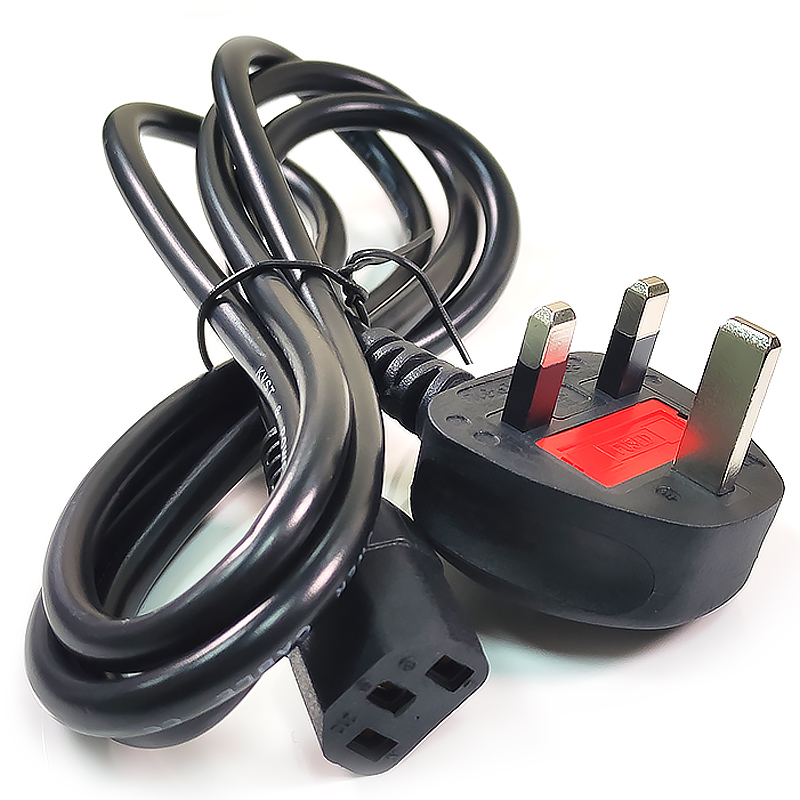
The most consequential of those national additions is the fused plug. The United Kingdom requires the plug on a domestic cord to carry a cartridge fuse that protects the flexible cord, and UK law — the Plugs and Sockets etc. (Safety) Regulations 1994 — operates alongside BS 1363 to enforce it. A 16 A unfused plug of the IEC 60906-1 type is a perfectly good plug, and it is incompatible with UK law precisely because it has nowhere to put that fuse. So a cord destined for London and a cord destined for Berlin cannot share a bill of materials even though both are 230 V, three-core, 1.0 mm² appliances. One has a fuse compartment and a shutter-compatible 13 A plug; the other has a 16 A hybrid with earth clips.
A second addition is the insulated pin. Since the 2000 revision of AS/NZS 3112, plugs sold for use in Australia and New Zealand have been required to carry insulation partway down the active and neutral pins, a requirement enforced on plugs sold after 3 April 2005. The purpose is to reduce shock risk from a partially inserted plug. It is invisible on a product photo, it does not change how the plug fits, and it is the single most common reason a cord made to a superficially identical standard is rejected at goods-in.
The eight families that cover most export orders
Outside industrial connectors, domestic cords concentrate in a small number of families. The IEC assigns them letters — Type A through Type N — and those letters are useful shorthand for a conversation, but they are not a legal reference. A purchase order that says “Type I plug” describes a shape; a purchase order that says “AS/NZS 3112 plug, 10 A, insulated pins” describes a product that can be inspected.
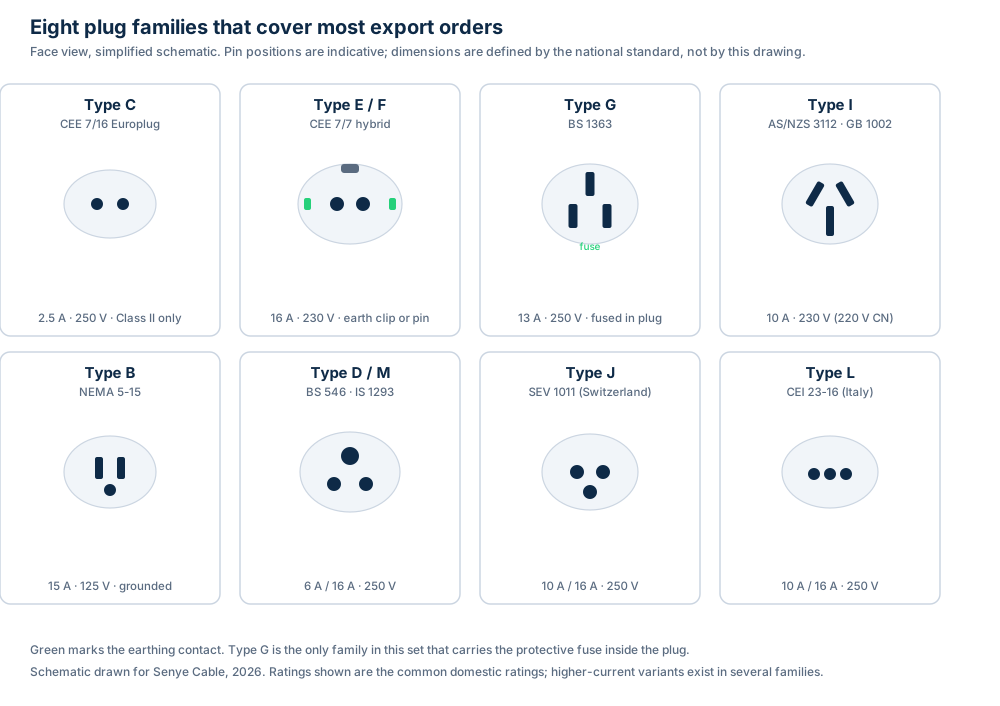
| IEC letter | Standard | Typical rating | Earth contact | Fuse in plug | Principal markets |
|---|---|---|---|---|---|
| C | CEE 7/16 Europlug | 2.5 A, 250 V | None (Class II only) | No | Most of continental Europe, as a Class II plug |
| E / F | CEE 7/7 hybrid | 16 A, 250 V | Side clips and pin hole | No | Germany, France, Netherlands, Belgium, Spain, Poland |
| G | BS 1363 | 13 A, 250 V | Top earth pin | Yes, BS 1362 | UK, Ireland, Cyprus, Malta, Gulf states, Hong Kong, Singapore |
| I | AS/NZS 3112 | 10 A, 230 V | Vertical earth pin | No | Australia, New Zealand, Fiji, Papua New Guinea |
| I | GB 1002 | 10 A, 220 V | Vertical earth pin | No | Mainland China |
| I | IRAM 2073 | 10 A, 220 V | Vertical earth pin | No | Argentina, parts of Uruguay |
| A / B | NEMA 1-15 / 5-15 | 15 A, 125 V | None / round pin | No | USA, Canada, Mexico, Taiwan, Japan (JIS) |
| D / M | BS 546 → IS 1293 | 6 A and 16 A, 250 V | Oversized round pin | Optional | India, Nepal, Bhutan, Namibia, Sri Lanka |
| J / L / K | SEV 1011, CEI 23-16, DS 107-2-D1 | 10 A to 16 A, 250 V | Offset or in-line pin | No | Switzerland, Italy, Denmark |
Table 1 — the families that cover the great majority of domestic export orders. Ratings are the common domestic ratings; several families offer higher-current variants with different pin geometry. Market lists are indicative of the principal domestic standard and are not exhaustive.
Europe is not one plug
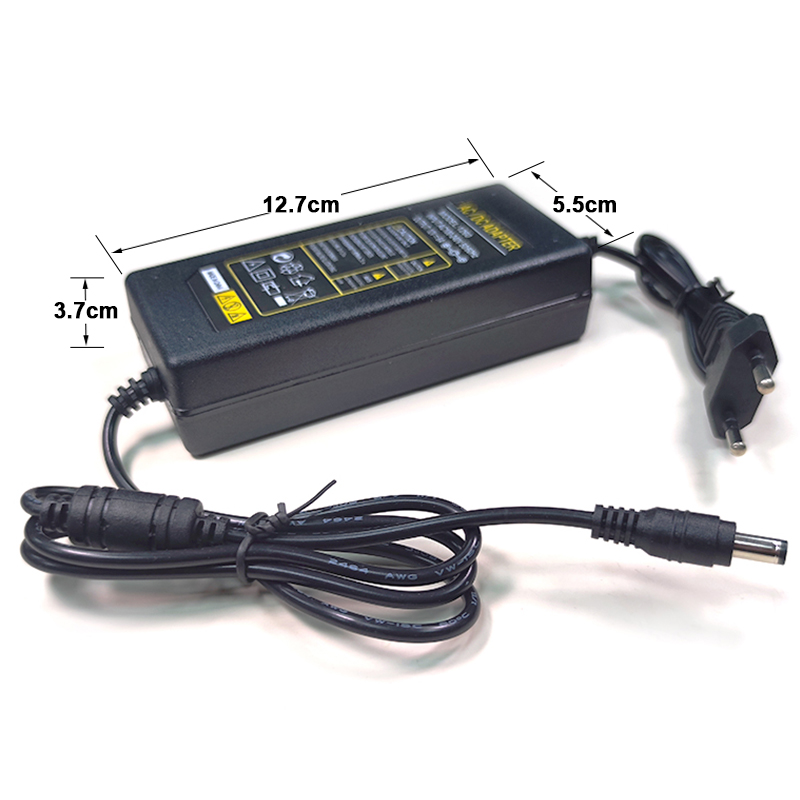
“European plug” is the phrase that starts most of these problems. Continental Europe alone runs five domestic systems, and they are not interchangeable. The one that dominates volume is the CEE 7/7 hybrid, an earthed plug built to fit both the German Schuko socket (CEE 7/3, IEC Type F) and the French socket (CEE 7/5, Type E). It manages this by carrying both earth arrangements at once: side clips that grip the Schuko socket, and a hole that accepts the French earth pin. That dual design is why a CEE 7/7 cord works in Berlin and in Paris. It is also why the plug is rated 16 A at a nominal 230 V, with a working range generally quoted from 220 V to 250 V.
Beneath it sits the CEE 7/16 Europlug, the flat two-pin plug moulded onto wall adapters and small Class II appliances. It is rated 2.5 A, it has no earth contact, and it is not a substitute for an earthed plug on a Class I appliance — a distinction that gets lost when a buyer specifies “two-pin EU” for a product that needs earthing. Then there are the three national systems that never adopted Schuko: the Swiss SEV 1011 with its offset in-line earth pin, the Italian CEI 23-16 with three pins in a row, and the Danish DS 107-2-D1 with its half-round earth pin. Each of these has a 10 A and a higher-current variant, and in each case the higher-current plug is physically larger and will not enter a 10 A socket.
The naming trap: why “EU plug” is not a specification
Here is the trap in its most common form. A buyer in Dubai, or a distributor shipping to several countries, writes “EU plug” on a specification sheet. Six different products can satisfy that phrase, and only one of them will work in the destination. The same happens with “UK plug”, which is read by some suppliers as BS 1363 and by others as the older BS 546 15 A round-pin plug still in service in South Africa and Singapore for high-current appliances. It happens with “China plug”, which is nearly — but not exactly — an Australian AS/NZS 3112 plug, and with “India plug”, where the 6 A and 16 A versions of IS 1293 are different sizes.
The pattern underneath all four is the same: a geographic word describes a market, and a market can contain more than one standard. A plug specification has to name a document and a rating. Compare what the two versions of the phrase actually commit a factory to:
| What the buyer writes | What it can legitimately mean | What breaks if the factory picks wrong |
|---|---|---|
| “EU plug” | CEE 7/7, CEE 7/16, SEV 1011, CEI 23-16, DS 107-2-D1, or BS 1363 for Ireland and Cyprus | Plug will not enter the socket, or enters without an earth connection |
| “UK plug” | BS 1363 13 A fused, or BS 546 15 A unfused | No fuse where the law requires one; wrong pin form entirely |
| “China plug” | GB 1002, or an AS/NZS 3112 plug treated as equivalent | Pins about 1 mm short for the socket, plus reversed mounting convention |
| “Australia plug” | AS/NZS 3112 with or without insulated pins | Non-compliant for sale; fails goods-in inspection on a feature no photo shows |
| “India plug” | IS 1293 6 A, or IS 1293 16 A | Cannot carry the appliance load, or will not fit the socket |
| “US plug” | NEMA 1-15 ungrounded, or NEMA 5-15 grounded, or NEMA 5-20 | No earth on an appliance that requires one; 20 A load on a 15 A plug |
| “Schuko” | CEE 7/4 plug, or CEE 7/7 hybrid | Will not mate with French Type E sockets in the same shipment |
Table 2 — the six geographic phrases that most often appear on a specification sheet, and what each one can legitimately be read as. Every row has a documentary answer; none of them has a geographic answer.
The fuse question, and why it changes the bill of materials
Only one family in the common set carries its protective device inside the plug, and that single fact drives a separate tool, a separate mould and a separate test. Under BS 1363 the plug must be fitted with a cartridge fuse to BS 1362, sized to protect the flexible cord rather than the appliance. The socket-outlet side is specified with shutters in the same standard, and the whole arrangement is backed by law in the UK through the Plugs and Sockets etc. (Safety) Regulations 1994.
The consequence for sourcing is practical. A BS 1363 plug cannot be moulded in the same tool as a CEE 7/7 plug, cannot be tested on the same fixture, and cannot be shipped as the same part number with a different label — the fuse carrier is a moving assembly with its own contact resistance and its own thermal behaviour under load. It also means a “universal” cord with an interchangeable head is a different product category, with its own approval position in each market, rather than a shortcut around the problem.
Current rating is written into the pin dimensions
Where the families differ most is not the shape but the scaling inside the shape, and this is the part buyers underestimate. AS/NZS 3112 is a good example because it publishes its variants openly. The standard 10 A plug has two flat blades measuring 6.35 mm by 1.6 mm, with the active and neutral pins 17.35 mm long and set at 30° to the vertical, and a 20 mm vertical earth pin. Step up to 15 A and the earth pin widens. Step up to 20 A and both the earth pin and the active and neutral blades widen. At 25 A the earth pin becomes an inverted L, and at 32 A a sideways U. The design logic is deliberate: a plug can enter a socket of equal or higher rating, and can never enter a socket of lower rating.
That one sentence explains a whole category of field complaint. A 15 A plug will not go into a 10 A wall socket, so a buyer who specifies 15 A for a commercial kitchen gets a cord that cannot be used in a domestic installation. The reverse mistake is worse: a 10 A plug that fits every socket, fitted to a 16 A appliance, becomes the weakest link in the circuit. The same logic governs IS 1293 in India, where the 6 A and 16 A versions are physically different sizes derived from the old BS 546 5 A and 15 A connectors, and NEMA 5-20 in North America, where the 20 A plug has its neutral blade rotated 90° so it will not enter a 15 A socket.
North America: three faces, four voltages, one trap
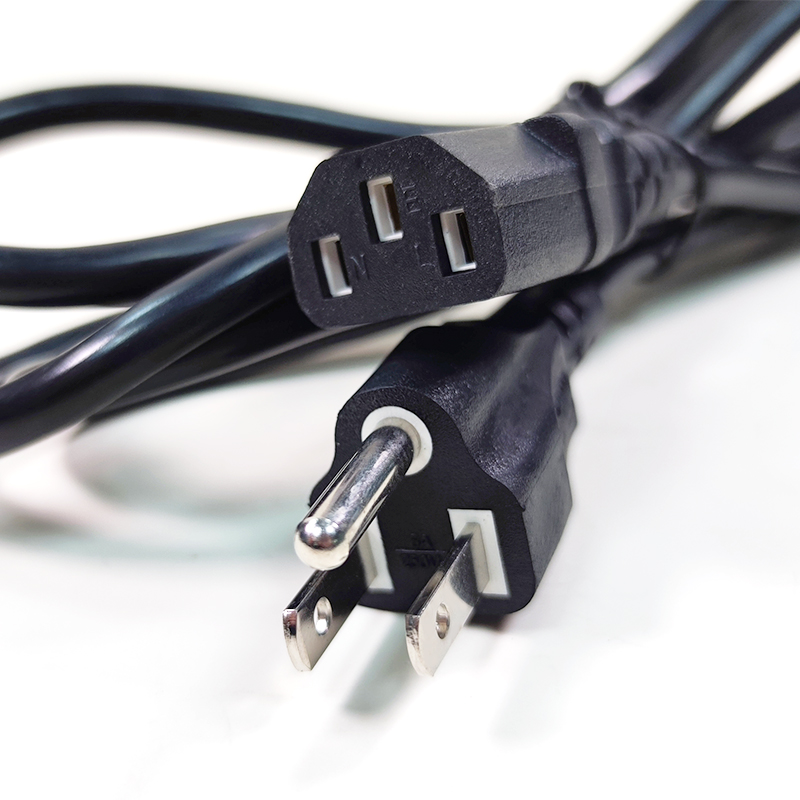
The NEMA system is systematic once you read the number. The digits after the dash give the current rating in amperes; the digits before it encode poles, wires and voltage class. NEMA 1-15 is the ungrounded 125 V 15 A plug with two parallel flat blades 6.4 mm wide, 1.5 mm thick and roughly 16 mm to 18 mm long, spaced 12.7 mm apart. NEMA 5-15 is the grounded version at the same 125 V and 15 A: identical blades plus a 4.8 mm round earth pin that is about 3.2 mm longer than the power blades, so the earth makes contact first. NEMA 6-15 moves to 250 V and 15 A with its blades collinear and horizontal rather than parallel and vertical.
Above domestic level the numbers climb quickly: NEMA 14-30 at 30 A, NEMA 14-50 at 50 A with four poles, NEMA 6-50 at 50 A with no neutral. The 14-50 is the one buyers now meet most often outside its traditional use, because it is a common North American electric-vehicle charging outlet — which is exactly why a cord quoted as “NEMA plug, 50 A” needs to say which of the 50 A configurations it is.
The trap in this region is Japan. A Japanese plug built to JIS C 8303 looks and works identically to NEMA 1-15, and the grounded versions correspond to NEMA 5-15. But the Japanese system imposes stricter dimensional requirements on the plug housing, different marking requirements, and mandatory testing and approval through METI or JIS. A NEMA 5-15 cord shipped to Tokyo will physically fit and will be the wrong product on paper.
The harmonisation that was attempted, and what it tells a buyer
Buyers sometimes ask why there is no single world plug, and the answer is instructive because it explains why the current set is stable. IEC 60906-1 was published in 1986 as an attempt at exactly that: an international plug and socket-outlet standard for 16 A, 250 V alternating current, intended to be acceptable to many countries as their national standard. The current edition dates from 2009. In practice only South Africa and Paraguay have introduced standards based closely on it — South Africa through SANS 164-2, where installation is mandatory, and Paraguay through PNA-IEC60906-1 adopted in November 2022, initially on a voluntary basis. Brazil based its NBR 14136 on the same idea but diverged: it uses 10 A and 20 A ratings rather than one 16 A rating, with 4 mm and 4.8 mm pins respectively, and does not require shutters.
Europe looked at harmonising and declined on cost grounds. A 2017 analysis under the European Commission's REFIT programme did not recommend harmonising domestic plug and socket systems, estimating transition periods beyond 75 years, a cost of about €100 billion, and roughly 700,000 tonnes of electrical waste. An earlier attempt through CENELEC in the 1990s had already been abandoned, with a cost estimate then of about $125 billion. For a buyer the practical reading is simple: the plugs in Table 1 are not a transitional mess that will soon resolve. They are the stable configuration for the life of any tooling you commission, so build the variant matrix once and keep it.
Five mistakes and what each one actually costs
1. Specifying by geography instead of by document. “EU plug” on the drawing, CEE 7/7 in the samples, French sockets on site. Consequence: the side clips work, the earth is made, but any destination with Type E sockets and no Schuko clips has an unearthed appliance. Cost: a re-plug operation, or a rejected consignment.
2. Missing the fuse on a UK order. The plug looks right, the pins are right, the fuse carrier is empty or absent. Consequence: the product cannot lawfully be sold with a cord attached. Cost: the cords are scrap, because a moulded plug cannot be opened and refitted economically.
3. Over-rating the current to be safe. A 16 A plug specified for a 10 A installation because it feels more robust. Consequence: it will not enter the socket. Cost: the customer cannot use the product at all, which is a harder complaint than a slow one.
4. Treating AS/NZS 3112, GB 1002 and IRAM 2073 as one part. They share a shape and differ in pin length, pin insulation and polarity. Consequence: one of the three markets gets a cord that either falls out of the socket or reverses live and neutral. Cost: a market-specific recall, plus the freight both ways.
5. Assuming a NEMA cord covers Japan. Physically identical, administratively not. Consequence: a compliant-looking product fails import approval. Cost: a hold at customs and a re-testing cycle that is measured in weeks.
How to specify it: four questions, then ten lines on the order
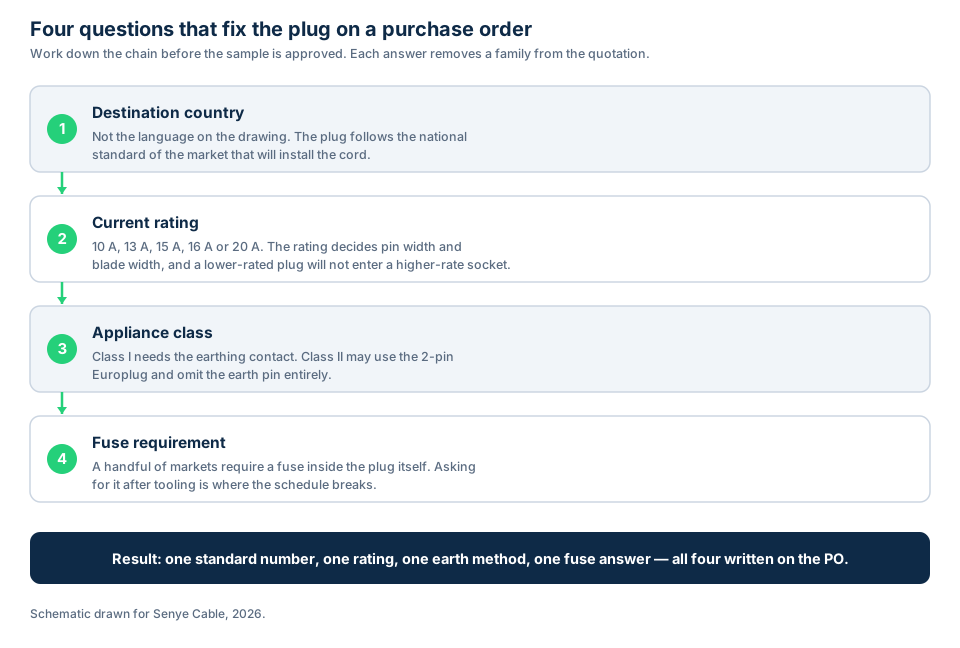
The sequence below resolves almost every domestic cord enquiry. It is deliberately ordered so that each answer eliminates families from the quotation before tooling is discussed, because tooling is where a wrong answer stops being free.
| # | Field to write on the purchase order | Example of a usable value | Why it earns its line |
|---|---|---|---|
| 1 | Destination country of installation | Australia | Settles the standard; not the same as the port of discharge |
| 2 | National plug standard and edition | AS/NZS 3112:2017 | An edition number rules out older pin dimensions |
| 3 | Current rating | 10 A | Determines pin width; a mismatch is unfittable, not marginal |
| 4 | Appliance class and earth requirement | Class I, earth required | Decides whether an earth pin exists at all |
| 5 | Insulated pin requirement | Insulated active and neutral pins | Mandatory in AU/NZ on plugs sold after 3 April 2005; invisible in photos |
| 6 | Fuse in plug, and its rating | BS 1362 fuse fitted, cord-matched | A legal requirement in the UK, not an option |
| 7 | Connector at the appliance end | IEC 60320 C13 | Separates the wall plug question from the appliance inlet question |
| 8 | Cord specification | H05VV-F 3G 1.0 mm² | Conductor size must be adequate for the plug rating |
| 9 | Length, measured end to end | 1.8 m, plug face to connector face | Removes the “overall length or exposed length” argument at goods-in |
| 10 | Marking, approvals and test report | CE/RoHS, 100% ageing test, report per batch | Makes the compliance claim inspectable rather than asserted |
Table 3 — ten fields that replace the phrase “EU plug”. Fields 2, 3, 5 and 6 do the work; the rest prevent a silent substitution in the same shipment.
Two links belong in that list at the point where the wall plug stops being the whole question. The cord itself is a separate decision from the connector: every assembly in our power cord range is built as a named variant rather than a generic “international” cord, and the appliance-end coupler — C13, C14, C5 or C19 — is specified independently of the plug on the other end. The same discipline applies to network cable orders, where the connector and the category both have to be named before a factory can quote, and to HDMI cable, where the length band decides the construction.
FAQ
Can one cord be supplied with interchangeable plug heads to cover several markets? Physically yes, and the product exists. Commercially it is a different article with its own approval position, because the assembly as sold has to satisfy the destination market's requirements rather than the requirements of the head currently fitted. When a buyer asks for a multi-market shipment, the more reliable route is a variant matrix: one part number per destination standard, one set of test reports per part number.
Is a CEE 7/7 plug acceptable in the UK? No. The UK domestic system is BS 1363, a 13 A plug with a fused carrier and shuttered socket-outlets, enforced through the Plugs and Sockets etc. (Safety) Regulations 1994. Ireland, Cyprus and Malta follow the same plug family. A CEE 7/7 cord shipped to any of them is the wrong product regardless of voltage.
Why will my 15 A Australian plug not fit the wall socket? Because AS/NZS 3112 scales the pin dimensions with the rating. The 15 A variant has a wider earth pin than the 10 A plug, so it cannot enter a 10 A socket; the 20 A variant widens the active and neutral blades as well. The interlock is intentional and is the reason a ratings mismatch cannot be worked around with force.
Is a NEMA 5-15 cord usable in Japan? It will fit. It is not the same product on paper: JIS C 8303 imposes stricter dimensional requirements on the plug housing, different marking requirements, and mandatory testing and approval through METI or JIS. For a Japanese destination, specify JIS C 8303 and treat the NEMA drawing as a starting point only.
Do I need an earth pin on every cord? It depends on the appliance class, not on the market. A Class II appliance may use a two-pin plug such as the CEE 7/16 Europlug, rated 2.5 A. A Class I appliance needs the protective earth, and the plug family you choose must provide it. The common error is specifying a two-pin plug because it is smaller and cheaper, on a product whose enclosure is metal.
Conclusion
The plug on the end of a power cord is the cheapest component in the box and the one most capable of stopping a shipment. It is fixed by four things only: the destination market's national standard, the current rating that standard scales its pins to, the appliance class that decides whether an earth contact exists, and the small number of markets that require a fuse inside the plug. Everything else — the colour, the moulding style, the branding on the body — is free to vary. Get the four right and the cord is a commodity; get one wrong and it is scrap metal with a certificate attached. We build power cords to BS 1363, CEE 7/7, CEE 7/16, AS/NZS 3112, GB 1002, NEMA 5-15 and the IS 1293 family as separate part numbers, each with its own mould, its own test fixture and its own report, which is what makes a variant matrix work in practice rather than only on a quotation.
Sources
IEC, IEC 60884-1:2022 Plugs and socket-outlets for household and similar purposes — Part 1: General requirements, scope as published (plugs and fixed or portable socket-outlets, AC only, rated voltage above 50 V and not exceeding 440 V), with the 1994 second edition scope statement from the same series. Wikipedia, CEE 7 and AC power plugs and sockets (retrieved 2026-11), for CEE 7/7 compatibility with CEE 7/3 and CEE 7/5 sockets and the 16 A 250 V rating. Wikipedia, BS 1363 and legislation.gov.uk, The Plugs and Sockets etc. (Safety) Regulations 1994, No. 1768, for the 13 A fused plug and shuttered socket-outlet requirement. Wikipedia, AS/NZS 3112 (retrieved 2026-11) — blade dimensions 6.35 mm by 1.6 mm, active and neutral pins 17.35 mm at 30° to vertical, 20 mm earth pin, 10 A standard rating, the 15, 20, 25 and 32 A variants and their pin scaling, insulated pins mandatory on plugs sold after 3 April 2005, current edition AS/NZS 3112:2017, and the GB 1002 and IRAM 2073 deviations in pin length and polarity. Wikipedia, NEMA connector (retrieved 2026-11) — NEMA 1-15 and 5-15 blade and earth-pin dimensions, 5-20 and 6-20 rotated-blade interlock, 6-15 collinear blades, 14-30, 14-50 and 6-50 ratings, and JIS C 8303 marking and METI/JIS approval. Wikipedia, BS 546 (retrieved 2026-11) — the 2, 5, 15 and 30 A family, IEC 60083 Type D and Type M designations, and IS 1293 upgrading the 5 A and 15 A connectors to 6 A and 16 A. Wikipedia, IEC 60906-1 (retrieved 2026-11) — 16 A 250 V scope, 1986 publication and 2009 second edition, South African SANS 164-2 and Paraguayan PNA-IEC60906-1 adoption, Brazilian NBR 14136 deviations at 10 A and 20 A, the 2017 EU REFIT recommendation against harmonisation with its >75-year transition, €100 billion cost and 700,000 tonne waste estimate, and the 1995 CENELEC abandonment. Wikipedia, Europlug, for the CEE 7/16 2.5 A Class II rating. Figures 1 and 5 are schematics drawn in-house for this article and are indicative rather than dimensional; Figures 2, 3 and 4 are product photographs from our own production.